Many marketing teams start with services like Darkroast because they need design support without hiring in-house. As creative demand grows, those same teams begin reassessing what they actually need to keep campaigns moving and brands consistent.
Darkroast isn’t designed for teams looking for one-off design projects or hands-on freelancer management. It’s also not built for companies that only need sporadic creative support. It’s structured for marketing teams that rely on steady output, tight timelines, and systems that remove operational friction.
This article breaks down the most common Darkroast alternatives and explains what works in practice for teams that rely on steady creative output. We’ll look at two main categories: subscription-based creative services and freelance marketplaces, and how each model holds up once workloads increase.
What Makes a Strong Darkroast Alternative?
Not all alternatives solve the same problems. Some focus on volume, others on speed, but very few address how creative work actually moves through an agency or marketing team. Before comparing providers, it helps to understand the criteria that matters most once you are past the trial phase and into day-to-day execution.
Consistency and Brand Reliability
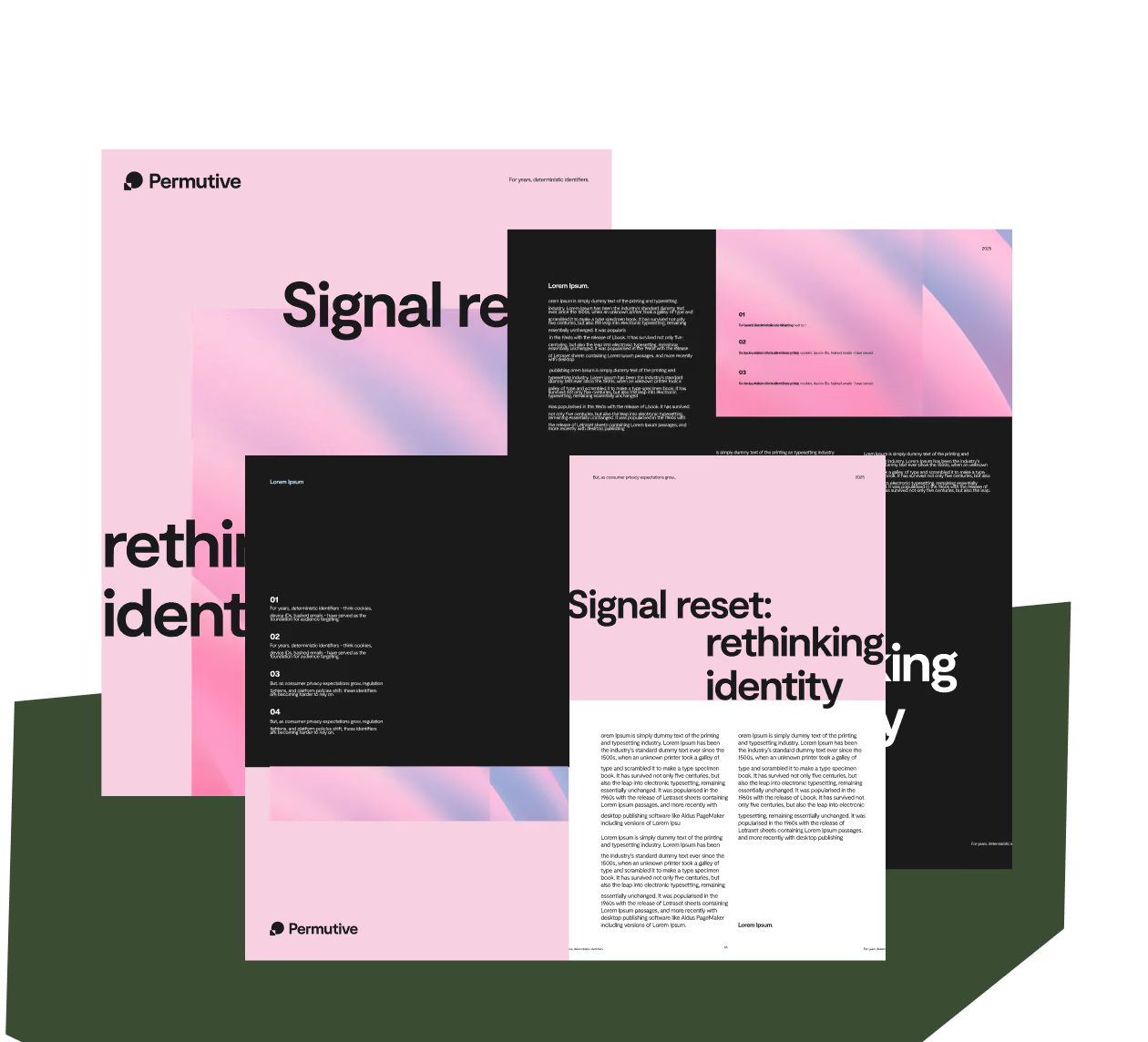
Design quality that changes every few tasks truly kills momentum. A strong alternative gives you the same set of designers working with your brand every month, so they learn your style and standards over time. This matters more than most teams expect. With Teamtown, your design team works with you on a first-name basis and stays consistent project to project. This shows up clearly in the quality and cohesion of the work produced across brands.
Speed, Capacity, and Predictability
Subscription services that let you submit requests on demand and return most deliverables in 24 to 48 hours remove a common bottleneck. Knowing your team isn’t waiting in slow queues gives your schedulers more breathing room.
Communication and Project Management
Teams don’t usually fall behind because design is slow. They fall behind because coordination breaks down. Briefs get interpreted differently, feedback fragments, and project managers spend hours translating back and forth.
A dedicated project manager keeps work moving, prioritizes tasks, and cuts back-and-forth noise. This saves your team time and frustration when every hour counts, especially in agencies with hard deadlines.
Breadth of Skills and Specialization
Many unlimited design platforms excel at fulfilling tickets, but struggle with system-level thinking. Not every “unlimited design” service can handle motion, product, web, and brand systems equally. This leads to assets getting produced in isolation, which weakens consistency across campaigns.
Look for teams that specialize across disciplines so deeper creative needs don’t flounder when clients demand more than static graphics.
Best Darkroast Alternatives in 2026
Most Darkroast comparison pages list similar services without explaining what actually affects creative teams once projects stack up. Things like queue reliability, skill coverage, and ownership over outcomes tend to matter more than how “unlimited” a plan claims to be.
Darkroast Alternatives Comparison Table
Rather than comparing surface-level features, the table below highlights how each alternative is structured in practice. Pricing models, team setup, project management support, and skill coverage all influence how well a service holds up once workloads increase and deadlines overlap.
Darkroast Alternatives Comparison Table
| Service |
Monthly Cost Ranges |
Team Model |
PM Included? |
Skills Covered |
Best For |
| Teamtown |
$$$-$$$$ |
Dedicated creative team + dedicated PM |
Yes |
Design, branding, web, motion, ongoing creative ops |
Teams managing multiple brands or campaigns who want consistency, ownership, and predictable output |
| Design Pickle |
$$-$$$ |
Shared designer pool |
Limited/add-on |
Graphic design (primarily production work) |
Teams with steady volume needs and simple design requests |
| Penji |
$-$$ |
Shared designers |
No |
Basic marketing graphics |
Small teams needing affordable, routine assets |
| Kimp |
$$-$$$ |
Shared team by tier |
No |
Graphic design, video |
Teams needing recurring design and video without deep strategic input |
| Flocksy |
$$-$$$ |
Generalist pool |
Yes |
Design, branding, web, motion, ongoing creative ops |
Teams managing multiple brands or campaigns who want consistency, ownership, and predictable output |
| Growmodo |
$$$ |
Pooled specialists |
Yes |
Design, development, web tasks |
Product and growth teams focused on website execution |
| Superside |
$$$$+ |
Managed creative teams |
Yes |
High-end design, branding, campaigns |
Enterprise teams with large budgets and long-term commitments |
| DesignJoy |
$$-$$$ |
Single designer per account |
No |
General design tasks |
Teams with predictable workloads and limited bandwidth |
| Upwork/Toptal/Marketplaces |
$-$$$$ (variable) |
Freelancers (self-managed) |
No |
Varies by hire |
One-off projects or highly specialized needs where internal coordination is acceptable |
The list below focuses on how each option performs in practice, especially for teams managing multiple brands and deadlines at once.
Teamtown
Teamtown is a subscription creative service built for teams that don’t want to manage freelancers or hire internally. You get a dedicated creative team and project manager working in your timezone with flat-rate pricing. That means brand continuity, faster delivery, and simpler workflow compared with most unlimited design services.
Design Pickle
Design Pickle offers unlimited graphic design at a monthly rate. It works well for ongoing volume needs, but falls short when your team needs specialist skills or strategic creative support beyond basic asset production.
Penji
Penji is an affordable subscription option that handles routine marketing graphics. It’s a good entry point for simple work but lacks the strategic oversight that many larger teams rely on.
Kimp
Kimp covers both graphic and video design tiers. It can handle regular output needs, but the gap here is in creative leadership and coordination at scale.
Flocksy
Floocksy blends design, video, and writing talent. Its breadth is useful, but its generalist model can weaken consistency when every channel you run needs a distinct voice.
Growmodo
Growmodo wraps project management and development support with design services. It’s strong for web-centric tasks but doesn’t always match the fixed cost predictability some teams require.
Superside
Superside delivers high-quality design support for enterprise use cases. Quality is solid, but higher minimum commitments and pricing can be a hurdle for mid-sized agency budgets.
Designjoy
Designjoy positions itself as offering fast, unlimited design. Usually, you get one designer per client, which can create bottlenecks and uneven skill coverage when your workload spikes.
Upwork, Toptal, Envato, and Dribbble Pro
Freelance marketplaces work when you need niche skills or one-off tasks. They’re not reliable as long-term solutions because every brief means sourcing, vetting, and onboarding a new contributor.
Why Subscription Design Teams Outperform Most Darkroast Alternatives
Freelance marketplaces and unlimited design services can work in the short term, but cracks can start to show as campaigns scale. Subscription design teams address common operational issues that appear once volume increases and timelines tighten. The difference is not just pricing structure; it’s how work is managed, reviewed, and delivered over time.
Predictable Output, Predictable Costs
Unlike marketplaces or hourly freelancers, subscription services charge one flat monthly rate. You stop guessing about costs and start planning to hit deadlines without surprise extra spend.
Dedicated Team Plus Creative System
You get the equivalent of an in-house design resource without payroll or overhead. With a stable team working your queue, every asset feels aligned and cohesive. “Unlimited revisions” often mean more back-and-forth, not better outcomes. Without shared context and clear creative ownership, teams spend more time reacting to feedback than improving direction.
Scalability for Agencies
Seasonal peaks, sudden campaign shifts, and high-volume ad production all require creative bandwidth that freelancers can’t sustain. Subscription teams scale with your needs without lengthy interviews or onboarding cycles.
Why Teamtown is a Strong Darkroast Alternative
Teamtown pairs dedicated designers with a project manager so you get work back fast, aligned with your brand, and without managing freelancers. Flexible plans mean you can scale your hours up or down and take advantage of unused hours rolling over. Most teams see faster turnaround and less admin overhead compared with marketplaces or solo freelancers.
Teamtown also gives you access to broad creative skills in one team: Brand, social, ads, video, motion, and web design, all under one subscription. That makes it easier to run multi-channel campaigns without juggling specialists.
Choose the Right Darkroast Alternative for your Team
If Darkroast doesn’t quite meet your quality and speed needs, pick an alternative based on:
- How much creative bandwidth you need.
- How important brand consistency is.
- How much project management support you want built into the service.
Subscription design teams like Teamtown give you consistency, predictable delivery, and fewer moving parts compared with marketplaces or solo freelancers. See what consistent, on-demand design looks like in practice.
Explore Teamtown's services today
Or book a discovery call.
Book a Call