Quick Answer: The best alternatives to ManyPixels are Teamtown, Designity, Flocksy, DotYeti and Kimp, and which one suits you depends on what you have run short of. Teamtown replaces a ManyPixels plan with a Creative Lead, a Project Manager and a team of designers from $3,000 a month, which is the answer once one daily output is no longer enough. Designity adds senior creative direction on its own. Flocksy gives you a fixed roster working your hours. DotYeti attaches an art director at $1,595. Kimp exists for teams whose real problem is video.
Key Takeaways
- ManyPixels is a design subscription. You pay a flat monthly fee for a set amount of design work each business day, submitted through a portal, rather than paying per project. Four tiers run from $699 to $2,599, about 10% cheaper when billed quarterly, and every one includes a project manager, source files and full copyright.
- This is not a service with a quality problem. It scores 4.8/5 on Trustpilot and 4.9/5 on G2, and has run since 2018. If you are leaving, it is almost certainly because of how the plans are built, not how the work turns out.
- Work out which gap you are closing before you shop. Senior direction, more capacity, video included rather than gated, and hours that match yours are four different purchases, and they carry very different price tags.
- Cheaper alternatives exist, but they trade away the things ManyPixels does well. If you are shopping down from $699, expect to give up published pricing, the project manager, or the breadth of the entry tier.
- Teamtown is the answer when design has become a team-sized problem. A Creative Lead, a Project Manager and a group of designers covering brand, web, ad creative, social, presentations, motion and video. Pricing opens at $3,000 monthly and nothing you sign runs for a year. Book a demo and see how we work.
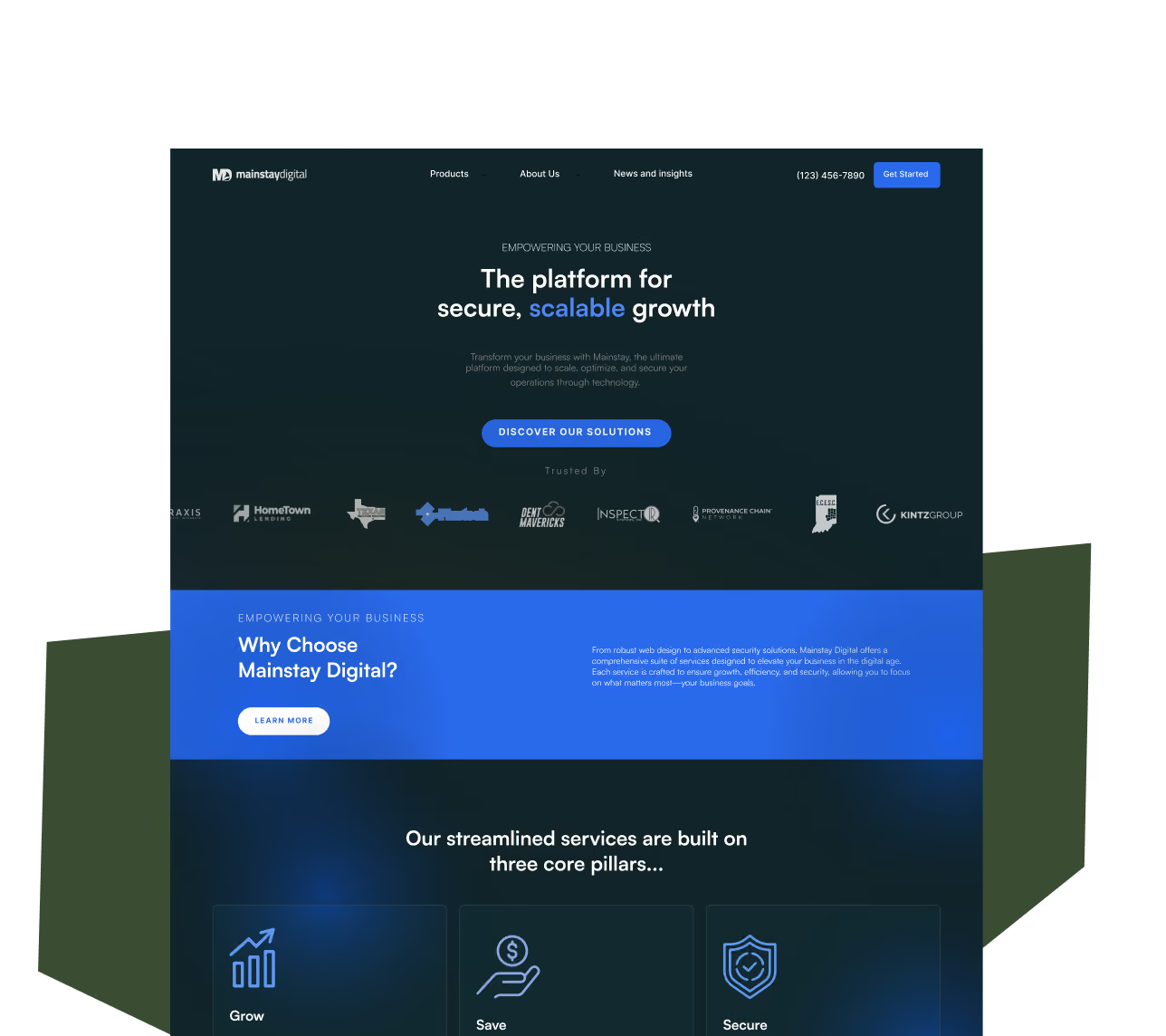
ManyPixels is one of the few services in this category that tells you exactly what you are buying. Four prices on the page, a daily output figure rather than a vague promise of unlimited work, cancel whenever you like, and you own every file.
If you are already a customer, something has probably changed on your side rather than theirs. The marketing team grew. A campaign needed motion. Someone asked who was actually responsible for how the brand looks, and the honest answer was nobody.
If you are still deciding whether to sign up at all, this list is arguably more useful before you commit, because it shows you what a ManyPixels plan does not cover.
Fair warning before you start: Teamtown is my company, and it is the first entry below. Several of the others cost less than we do, and for some of you one of them is the better answer. I have tried to write it so you can tell which.
The Full List, Side by Side
Prices last checked September 2026
Four Reasons Good Customers Still Leave
This is not a service with a reputation problem. It has run since 2018, claims more than 150,000 projects delivered, and its review scores sit at the top of the category.
Still, these things drive people away.
- Nobody owns the creative direction. You get someone coordinating the work and someone checking it before it ships. Both jobs matter. Neither of them involves deciding what good looks like for your brand, and that matters.
- Capacity is fixed, and small at the entry tier. The $699 Advanced plan works out to about two hours of design a day. Higher tiers roughly double it: four hours, then eight. Whatever you buy is what you get every day, so a busy week does not get you more designers. It gets you a longer queue.
- Motion and video are not in the entry plan. The $699 Advanced tier excludes them entirely. Motion graphics and video editing become available from Business at $1,199, so if video has become half your output the entry plan is not a real option and your baseline cost is higher than the headline price suggests.
- Designer continuity costs extra, and Pacific hours are not offered. A named designer starts at the $1,399 tier, and those plans advertise US Eastern, Central European and Indochina hours. No dedicated Pacific-time option is listed, so West Coast teams get partial overlap rather than a designer working their day.
How This List is Ordered
This is not ranked best to worst. It is grouped by the gap each service fills.
First come the services that add senior creative direction and more capacity. Then the ones that add a missing skill, usually video or development. Then the cheaper options, for teams whose problem is the bill.
So start by naming your gap.
The costliest mistake here is buying a service that fixes four things when only one was broken, and paying for the other three every month. Read the trade-off line under each entry, because that is where you find out what you would not be using.
Reading the Reviews Properly
ManyPixels holds 4.8/5 on Trustpilot and 4.9/5 on G2. Reviewers repeatedly name the same strengths: speed to a first draft, an easy portal, and quick revisions. Any honest list has to start there.
The criticism is more about consistency and revision cycles than outright design quality.
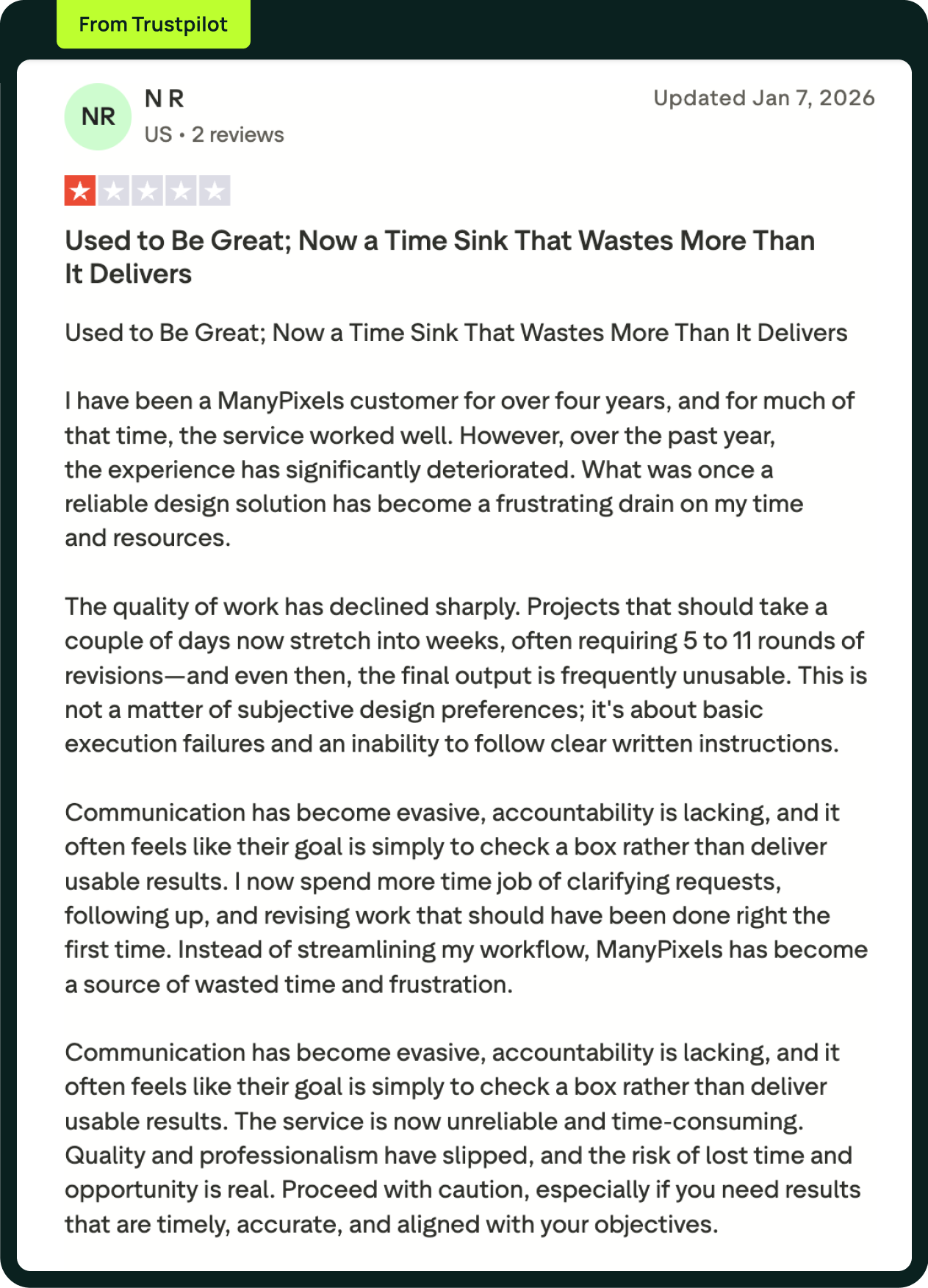
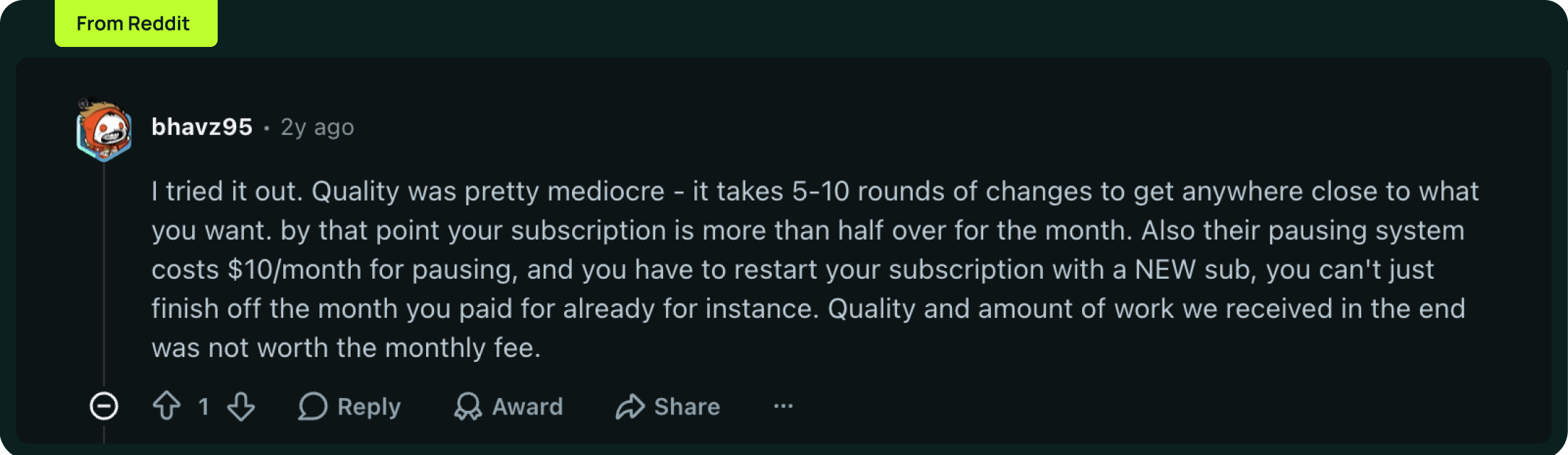
Some customers say projects slow down when a designer changes or misses the brief, leading to repeated rounds of revisions that eat into both turnaround time and the value of the monthly subscription.
15 ManyPixels Alternatives, Sorted by the Gap They Fill
1. Teamtown: Best When You Have Outgrown a One-Designer Plan
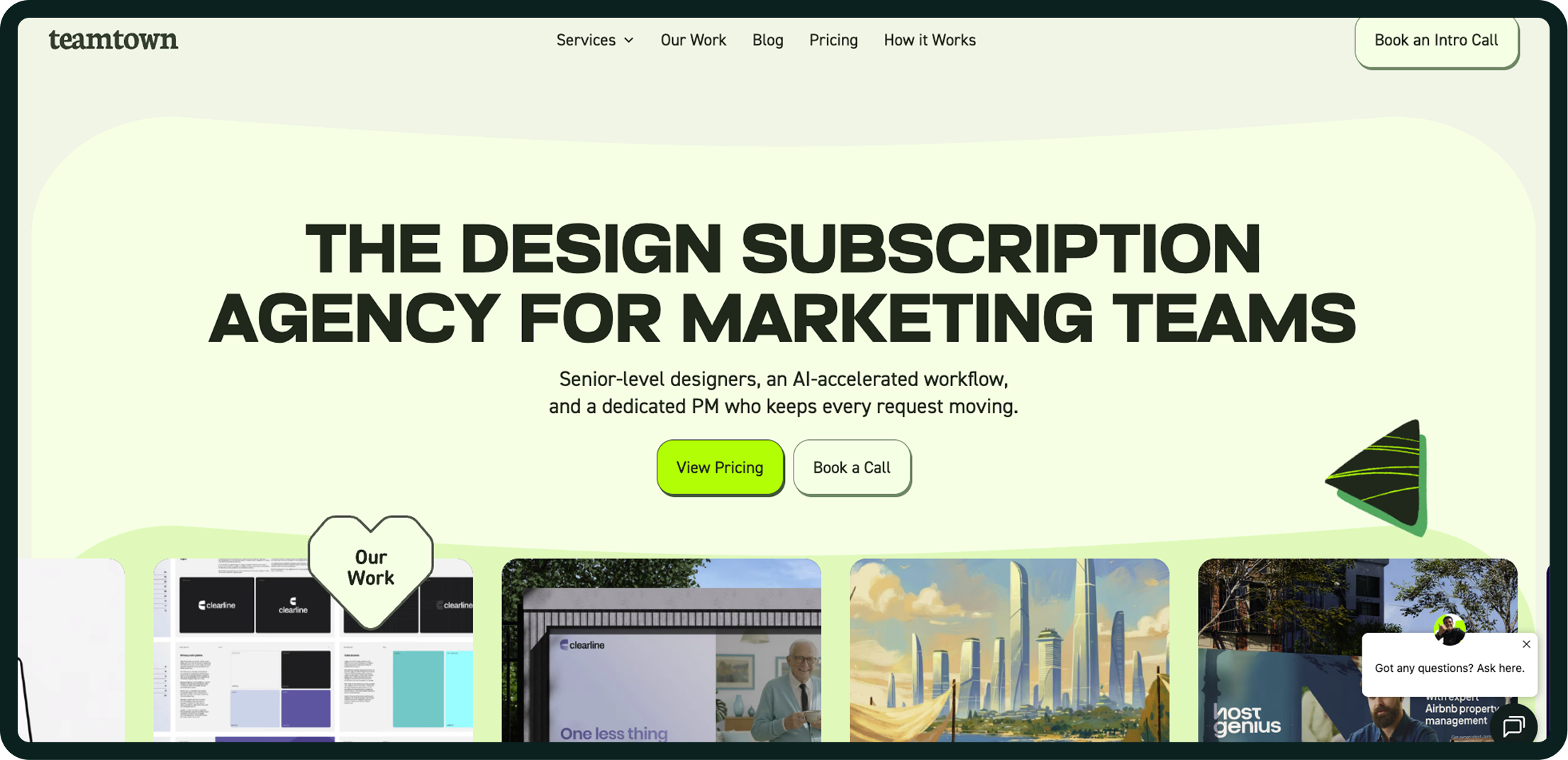
My company, so weigh this entry accordingly. Here is the case as plainly as I can make it.
ManyPixels sells you output. Teamtown sells you a team. You get a Creative Lead who owns how the work looks, a Project Manager who owns whether it lands on time, and a group of designers behind them, all of whom stay on your account.
That structure is the thing a $699 plan cannot reproduce at any volume. It is also why the price is different: $3,000 a month is more than four times the ManyPixels entry, and I would rather say that plainly than bury it.
The scope runs wider than a graphics queue: websites and landing pages, paid ad creative, organic social, decks, brand systems, motion and edited video. Essentials handles the core of that; the heavier video and web builds need Pro or Studio.
For scale: 5,000+ projects shipped for more than 200 companies, with nine in ten first drafts approved as sent.
- Best for: Marketing teams whose content output has overtaken what a two-hour daily allowance can absorb.
- Pricing: $3,000 for Essentials, rising to $4,500 for Pro and $9,900 for Studio. No annual term, and 15 days’ notice ends it.
- Turnaround: Most work lands within 24 to 48 hours, depending how involved it is.
- Rating: 4.6/5 on Trustpilot. Reviewers mention the consistency of working with the same people and the ability to scale capacity in either direction.
- Trade-off: If a steady stream of static graphics is all you need, ManyPixels does that job for a fraction of the price and you should stay put.
Not sure whether the gap is direction, capacity or scope? A short call will make it obvious, and we will tell you if a cheaper service on this list is the better answer. Book a demo
2. Designity: Best If Direction Is the Missing Piece
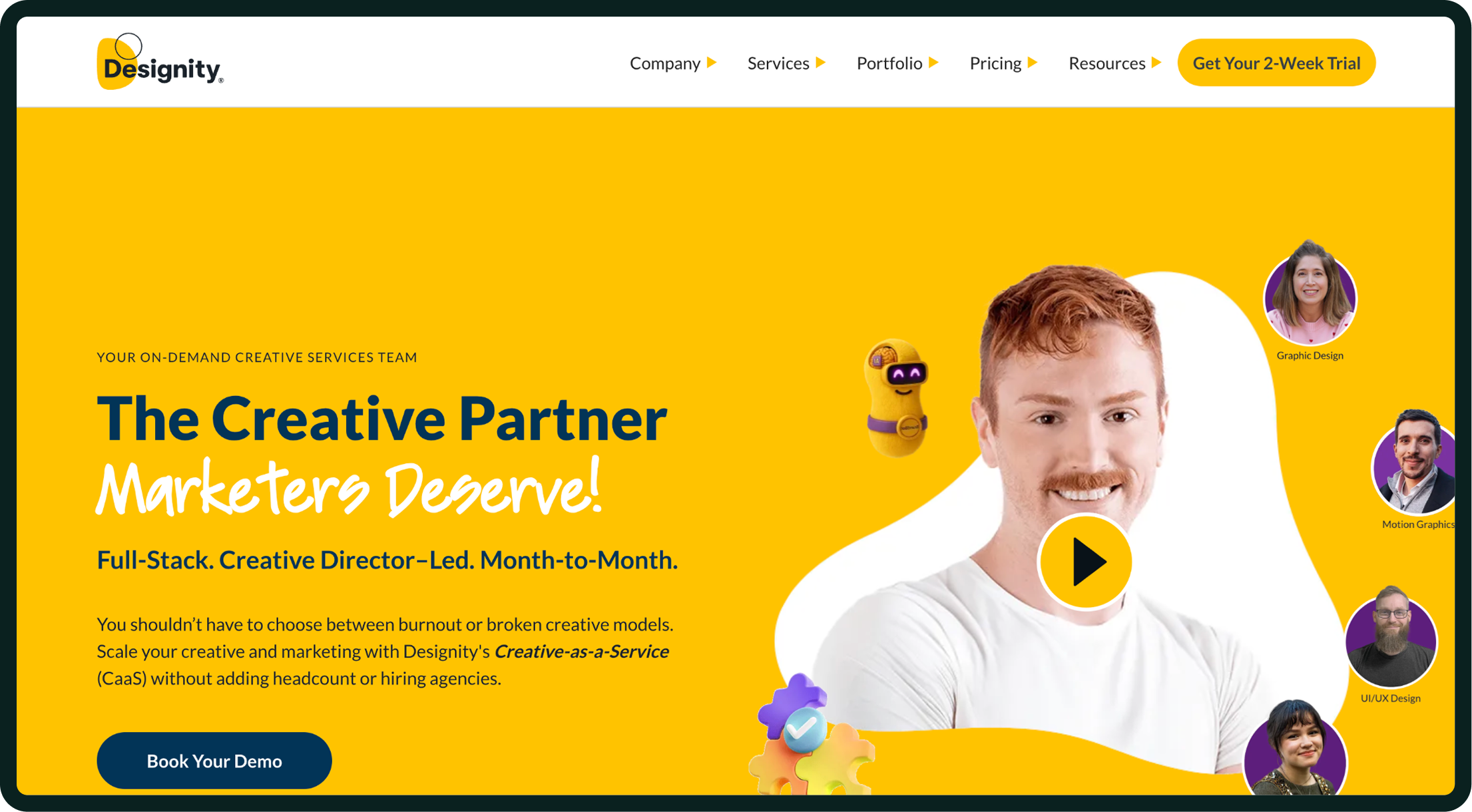
Designity puts a named Creative Director on every account as your single point of contact, then pulls vetted specialists in per brief. Its whole community works US hours, which solves the coverage problem. There is a two-week trial with nothing paid upfront.
- Best for: US teams who need someone senior accountable for the brand, not just for the queue.
- Pricing: $5,995 a month for 120 dedicated hours, $8,995 for 180, with a seven-day cancellation notice.
- Rating: 4.7/5 on G2, with the director relationship the most cited strength.
- Trade-off: Roughly eight times the ManyPixels entry price, and the hours are a hard cap that a video-heavy month burns through fast.
3. Flocksy: Best for Your Own Hours and a Fixed Roster
.png)
Flocksy matches its team to your time zone and gives you one permanent person for each type of work, so the designer, video editor and illustrator stay the same. Capacity is sold in daily hours, and unused hours roll forward for 30 days, which is unusual in this category.
- Best for: Teams outside US Eastern who want continuity without paying enterprise rates.
- Pricing: $1,699 a month for two daily hours, up to $5,899 for eight. Annual billing brings the entry down to about $1,199.
- Rating: 4.9/5 on G2, where the permanent roster is what reviewers praise most.
- Trade-off: An art director only appears from six daily hours, and rollover hours vanish if the plan lapses.
4. Penji: Best for a Refund Window Before You Commit
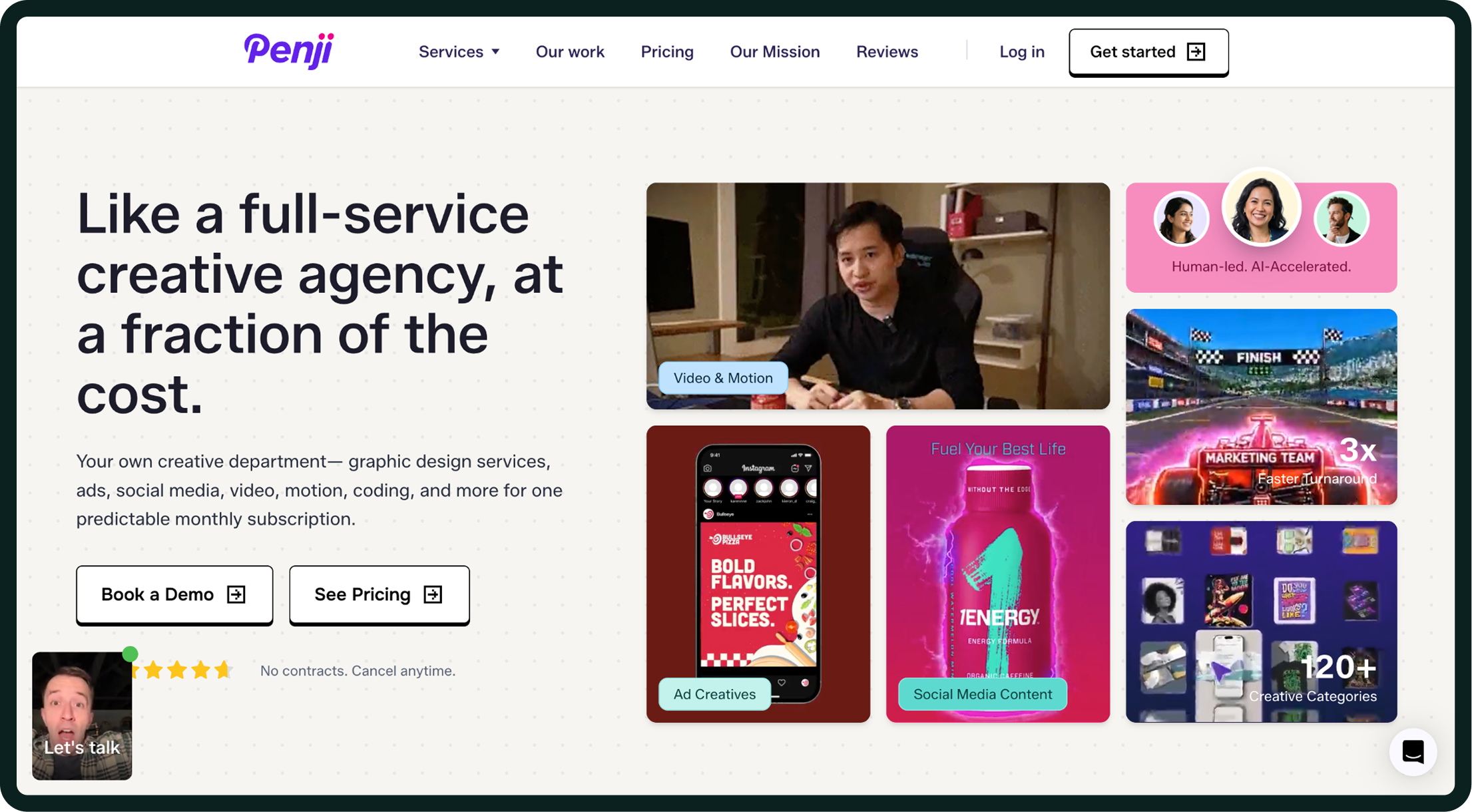
Penji is the closest straight swap on this list, at a slightly higher price. The draw is a 30-day money-back guarantee, which ManyPixels does not offer, so you can test a switch without betting a quarter on it.
One thing to settle before you sign: Penji publishes conflicting answers on whether its entry plan includes art director oversight, so get it in writing. What is not disputed is that video, motion and web design only appear on the Agency Partner plan.
- Best for: Buyers who want a money-back window before committing to a switch.
- Pricing: $995 for Essentials and $1,995 for Agency Partner, with 15% off quarterly and 20% off yearly billing.
- Rating: 4.7/5 on G2, one of the deepest review bases at this price point.
- Trade-off: Penji’s own FAQ says the same designer is not guaranteed below its top tier, so continuity is no better than what you already have.
5. DotYeti: Best for a Dedicated Team With an Art Director Attached
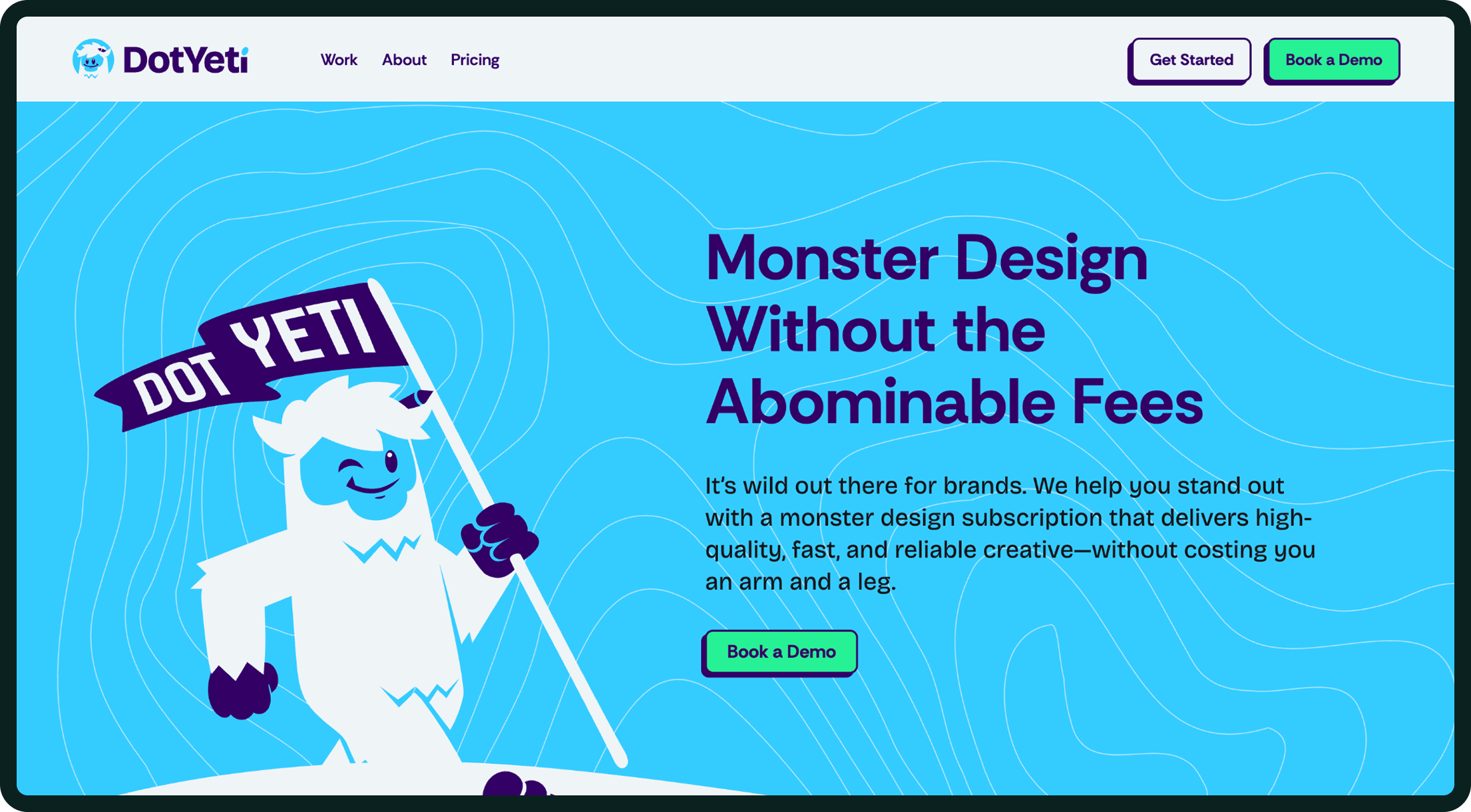
DotYeti builds its tiers by adding people rather than adding request slots, which is unusual at this end of the market. The middle tier attaches a dedicated art director, and the top one adds an account manager alongside motion graphics, video editing and web design. Every monthly plan carries a 14-day money-back guarantee.
- Best for: Teams who want a named art director on a dedicated team without a $6,000 plan.
- Pricing: $995, $1,595 and $2,595 a month, lower on a six-month term.
- Rating: 4.8/5 on Trustpilot. The tiers are built by adding people rather than adding request slots, which is unusual at this price.
- Trade-off: Two active requests at a time below the top tier, and the six-month cancellation terms are not published.
6. Kimp: Best If Video Has Become Half the Work
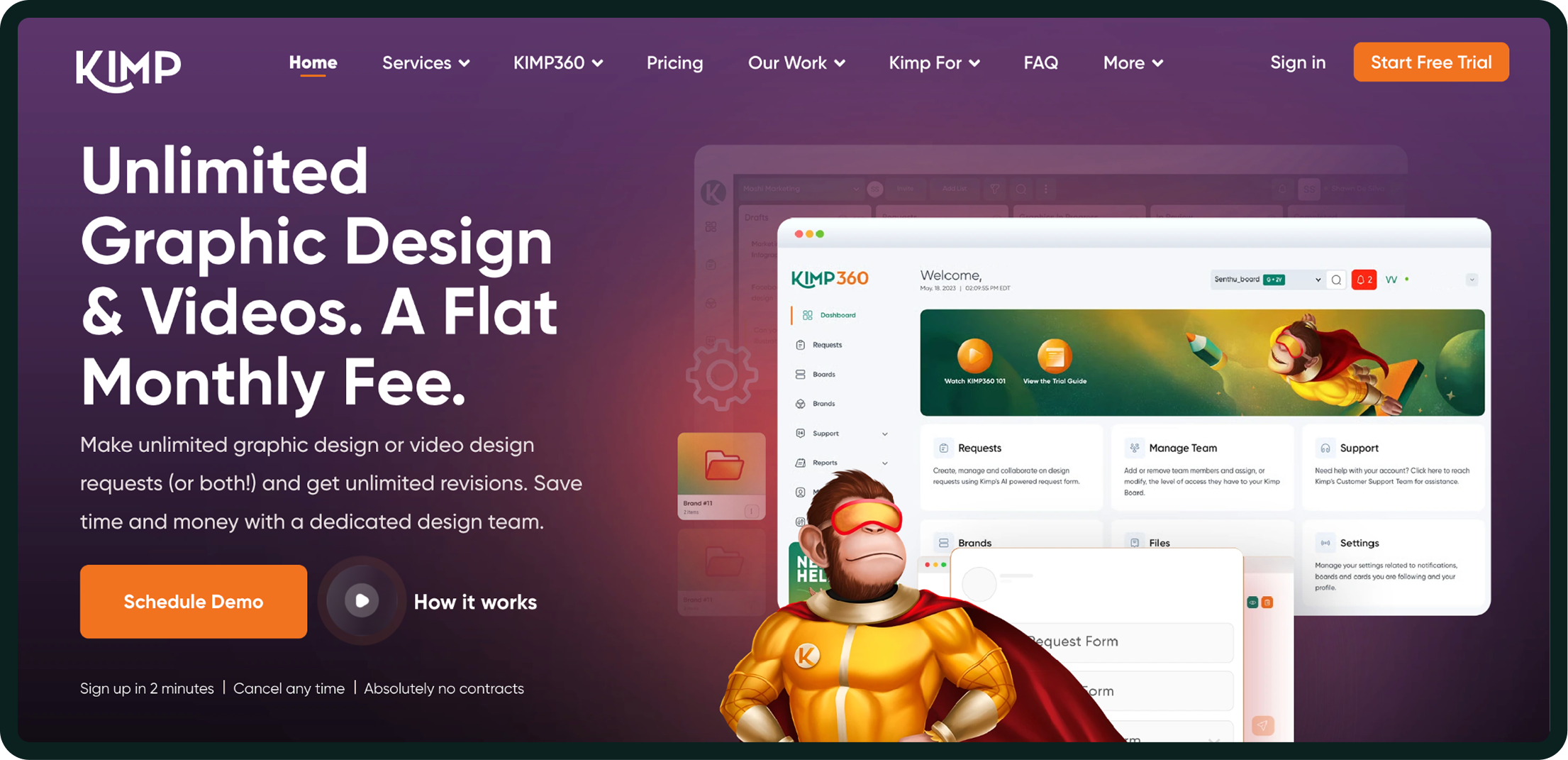
Kimp treats video as a main service rather than a bolt-on, selling it as its own subscription rather than gating it behind a higher tier. Each account gets a dedicated creative team plus project management, and teams are assigned by client region. A seven-day trial runs before any charge.
- Best for: Social and content teams putting out as much video as they do static work.
- Pricing: Graphics is $1,397, Video is $1,397, and taking both costs $1,697. A half-price introductory period covers roughly your first four months, so plan around the full figure.
- Rating: 4.9/5 on Trustpilot, against 4.1/5 on G2 where far fewer people have reviewed it.
- Trade-off: No creative director in the model, so you gain video capability without gaining direction.
7. Design Pickle: Best for Volume Across Multiple Time Zones
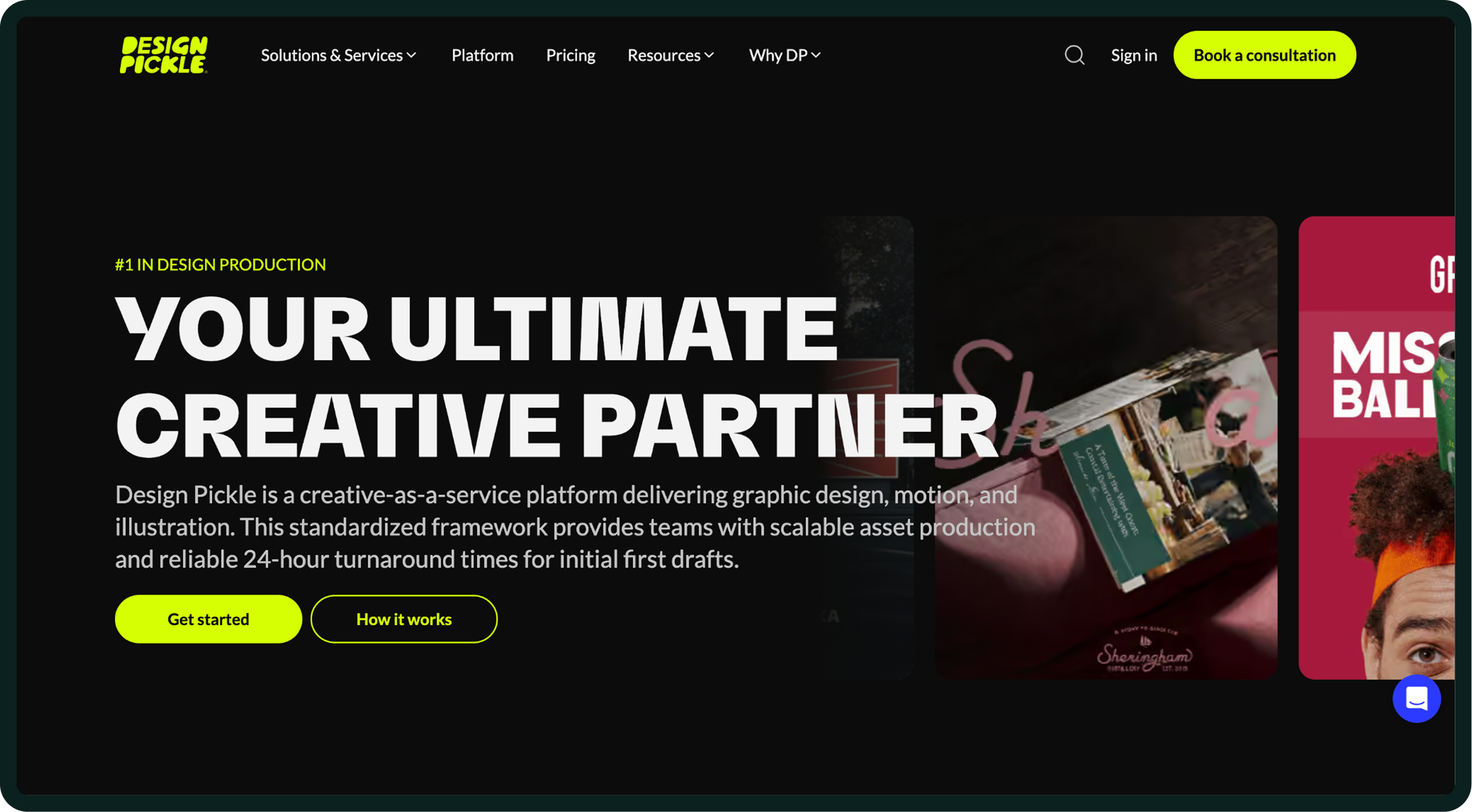
Design Pickle runs production in four zones covering Pacific, Eastern, Australian Central and British hours, which closes the coverage gap in the ManyPixels named-designer plans. Capacity is sold by daily creative hours, and you can add an art director rather than include one.
- Best for: High-volume production teams who need hours that overlap their own and can commit for a quarter.
- Pricing: You will not find a number on the site. Expect a sales conversation, then quarterly or annual invoicing, with nothing refundable once a term rolls over.
- Rating: 4.4/5 on G2, though Trustpilot puts it far lower at 3.4/5.
- Trade-off: You trade ManyPixels’ published prices and cancel-anytime terms for a quote and a lock-in.
8. Superside: Best If Budget Is Not the Constraint
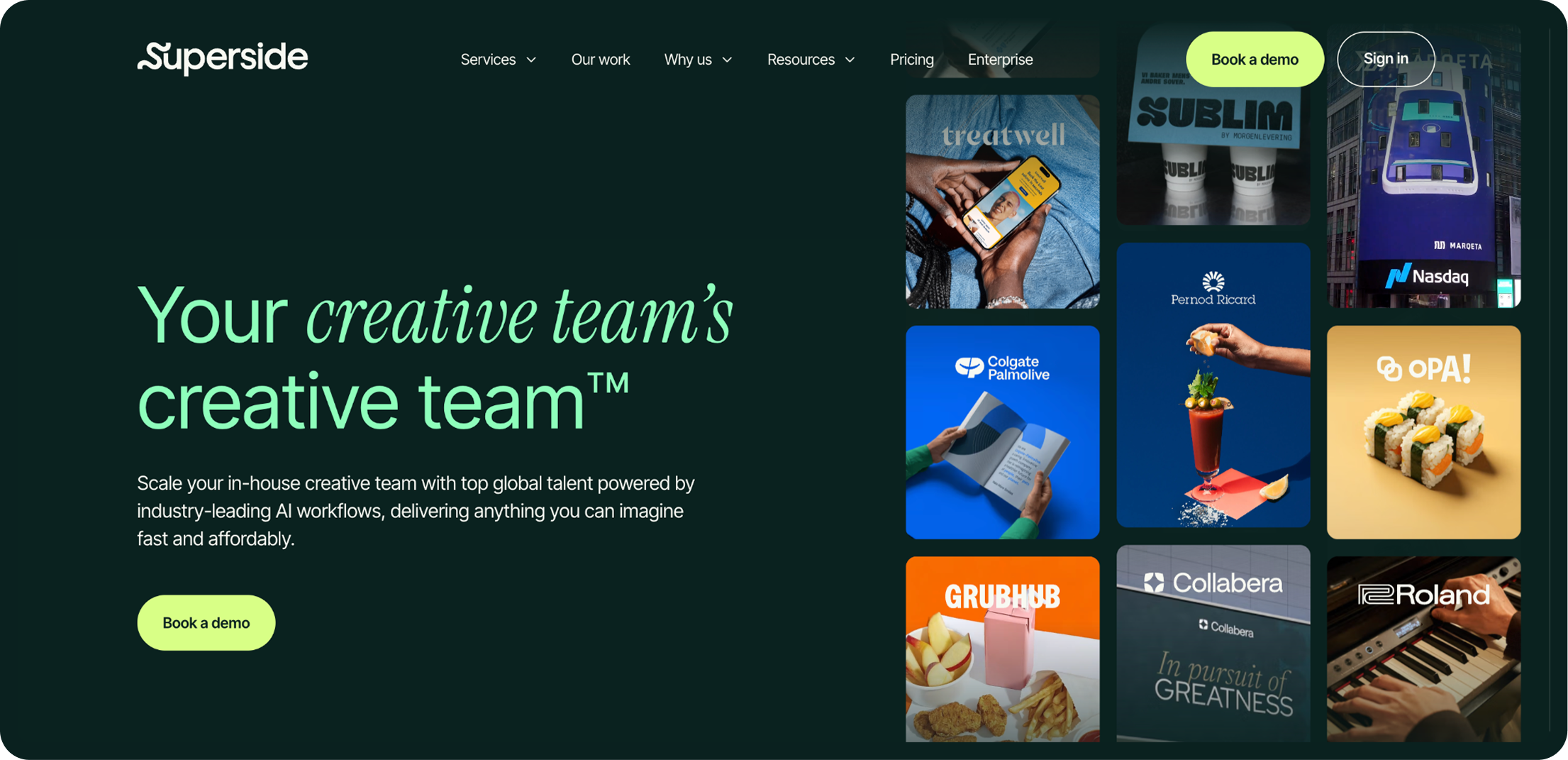
Superside closes every gap in the ManyPixels model at once: creative direction as standard, video in volume, enough capacity for several campaigns running together, and coverage across most of the day. The catch: price is the catch and it is a large one.
- Best for: Large brands running many campaigns at once with formal procurement requirements.
- Pricing: Subscriptions open at $15,000 a month and require a twelve-month term, with software billed separately at $1,000 a month.
- Rating: 4.5/5 on G2, with execution quality the strongest theme.
- Trade-off: The annual minimum works out around $192,000, against roughly $8,400 a year at the ManyPixels entry tier.
9. No Limit Creatives: Best If You Want to Configure Your Own Plan
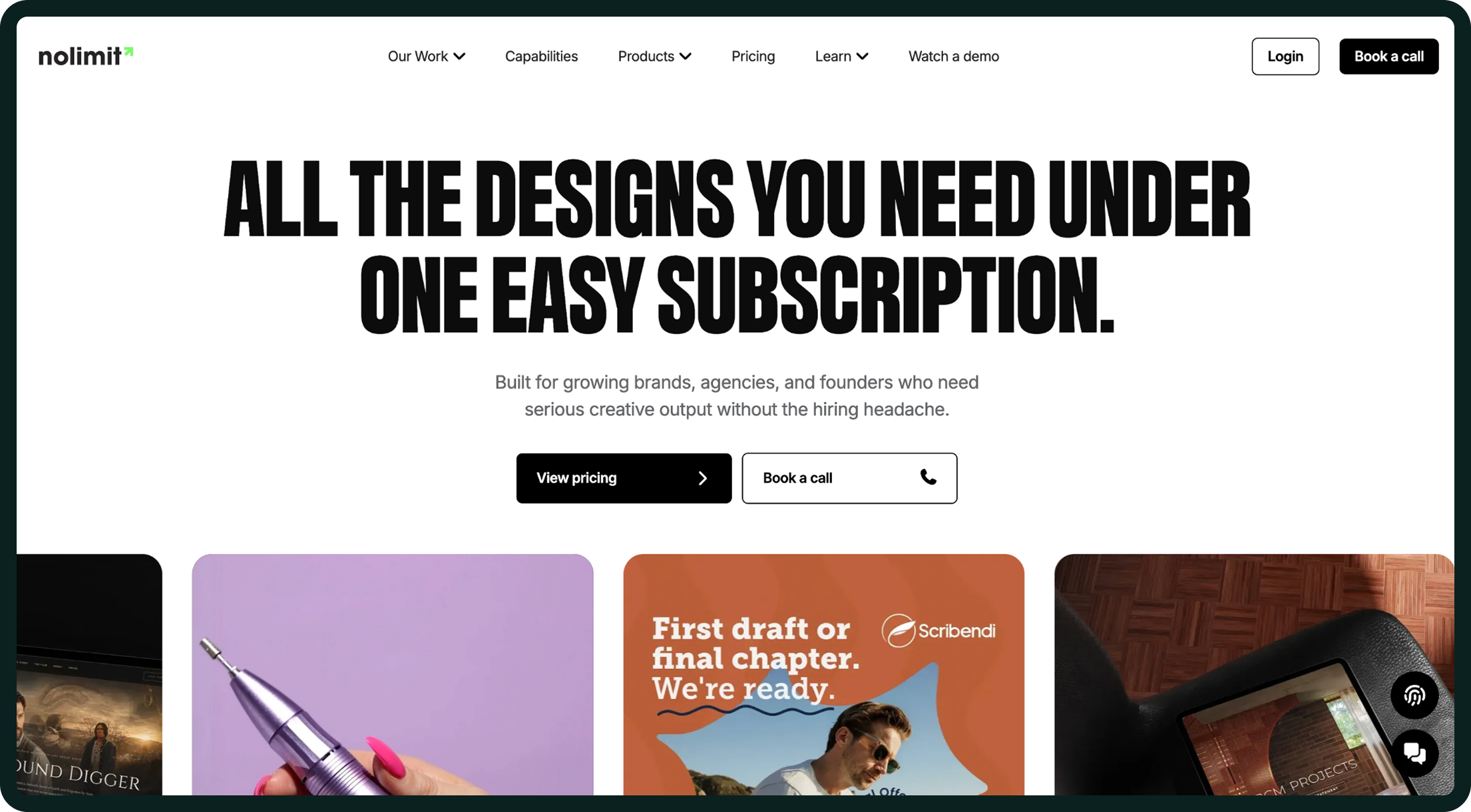
No Limit Creatives does not sell plans off a list. You configure one by choosing the creative category you need, how many runs run in parallel, and whether you manage the work yourself or hand it over. The fully managed route attaches a dedicated Creative Director and a project manager, which is what makes it worth a look for anyone leaving ManyPixels over direction. Working hours are published as 8am to 8pm Eastern.
- Best for: Teams who want named creative direction and are willing to configure a plan rather than pick one off a list.
- Pricing: From $250 a month on the credit-based Starter plan, or $500 for unlimited self-managed design. Fully managed pricing depends on category and slot count, so use the configurator rather than a quoted range.
- Rating: 4.9/5 on Trustpilot, with staff continuity a common theme.
- Trade-off: All sales are final, there is no trial, and they only offer Eastern hours.
10. Awesomic: Best for Fast Matching and Free Rematching
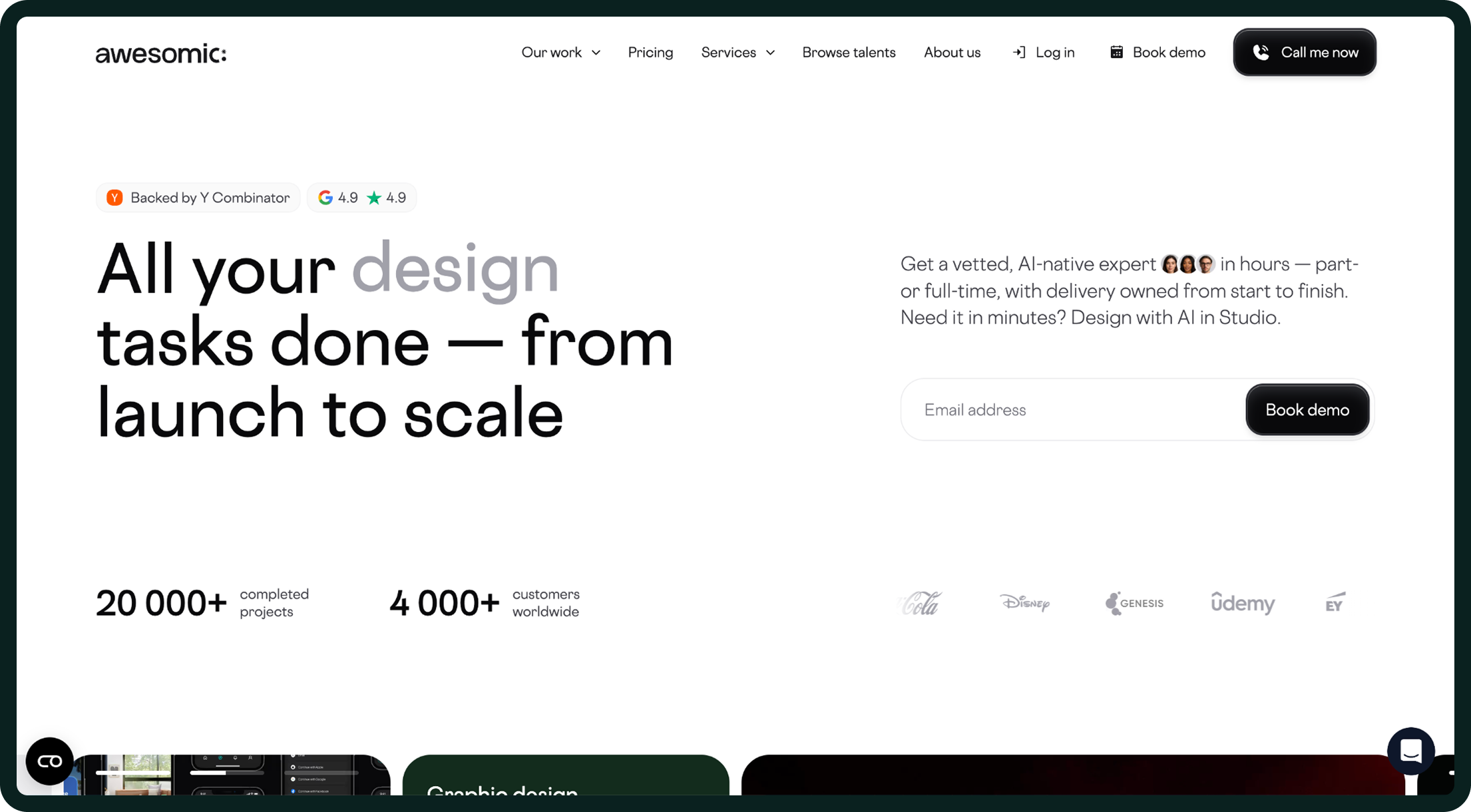
Awesomic matches you with a vetted designer within 24 hours and lets you swap them at no cost if the fit is wrong, directly addressing the designer-continuity complaint without charging a premium. It also covers no-code, development and marketing.
- Best for: Startups who want to start this week and change designer without a negotiation.
- Pricing: $1,490 a month for design and $2,995 for the all-in-one tier, lower on a quarterly commitment.
- Rating: 4.8/5 on Trustpilot from 63 reviews.
- Trade-off: Working hours are not published, and a quarterly plan cannot be canceled within the three months.
11. Growmodo: Best If You Also Need Development
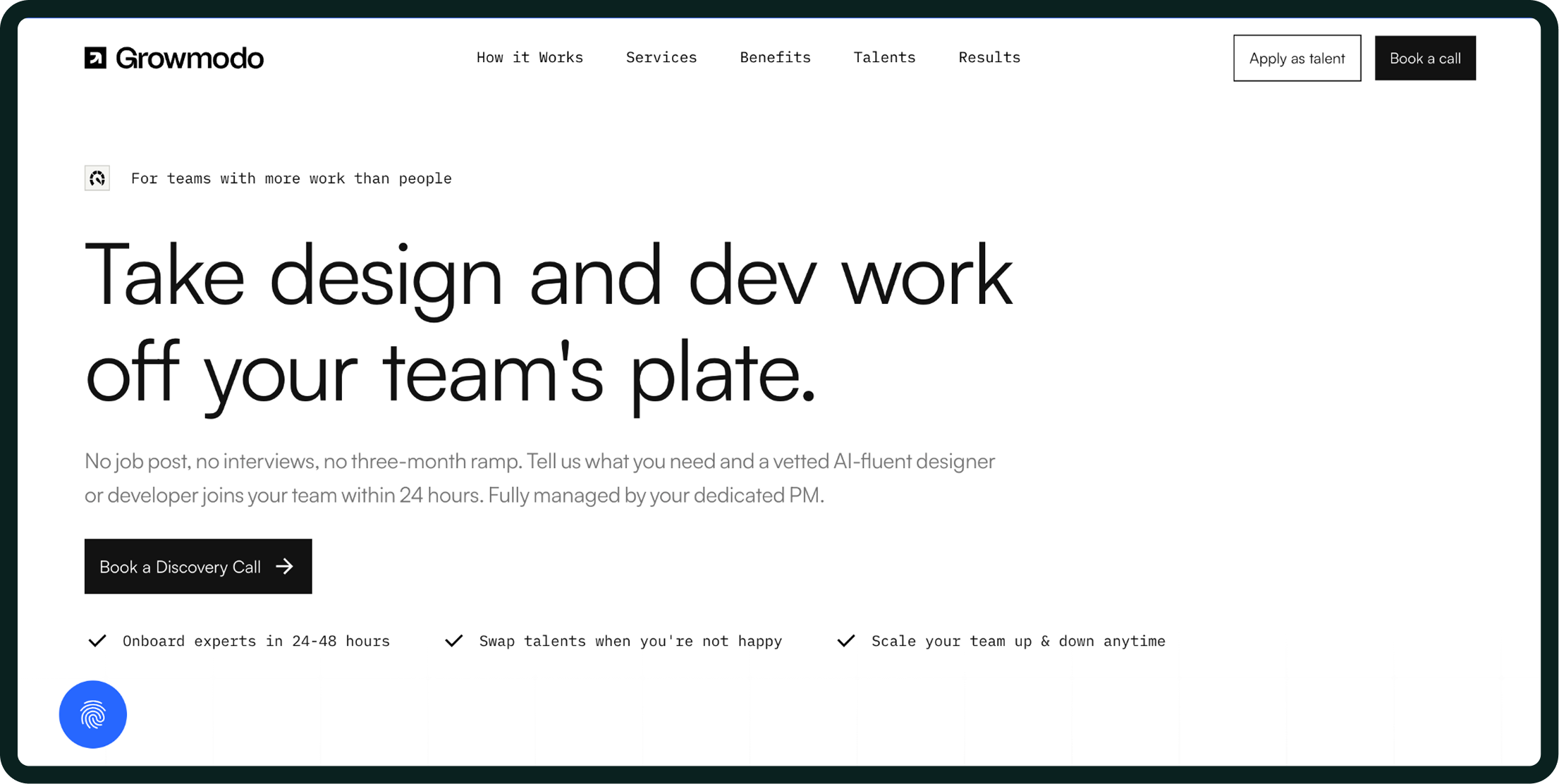
Growmodo pairs design with genuine web development behind a dedicated project manager, delivered white label, which suits agencies at capacity more than in-house teams. They match talent per project from a large specialist pool.
- Best for: Agencies who need design and build under their own brand.
- Pricing: Not published. The route in is a scoping call, and you are not charged until onboarding finishes.
- Rating: 4.8/5 on Trustpilot, though there is no verifiable G2 or Clutch profile.
- Trade-off: No published price, no trial, and per-project matching means the same continuity question as before.
12. Designjoy: Best for One Senior Pair of Hands
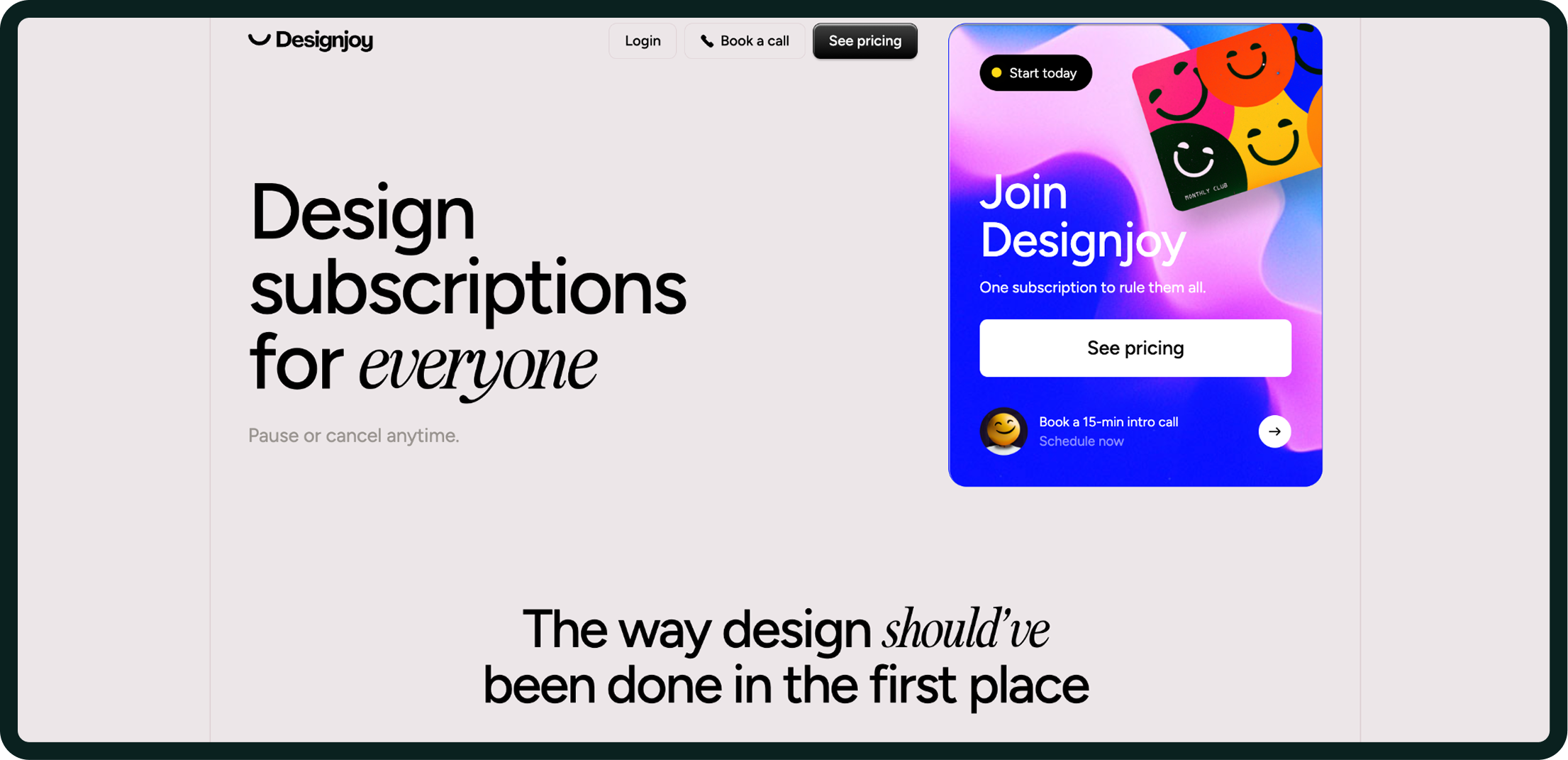
Designjoy is founder Brett Williams working alone, taking one request at a time at an average 48-hour turnaround. It is the same one-person idea as a ManyPixels Assigned Designer plan, at three and a half times the price and a considerably higher level of craft.
- Best for: Founders who care more about how the work looks than how much of it arrives.
- Pricing: $4,995 a month, pause or cancel whenever, with 75% back inside the first week.
- Rating: Too few third-party reviews to quote a meaningful score. The portfolio is the evidence here.
- Trade-off: One active request, no motion or animation, and everything depends on one person’s calendar.
13. Graphically: Best Cheaper Swap With Similar Scope
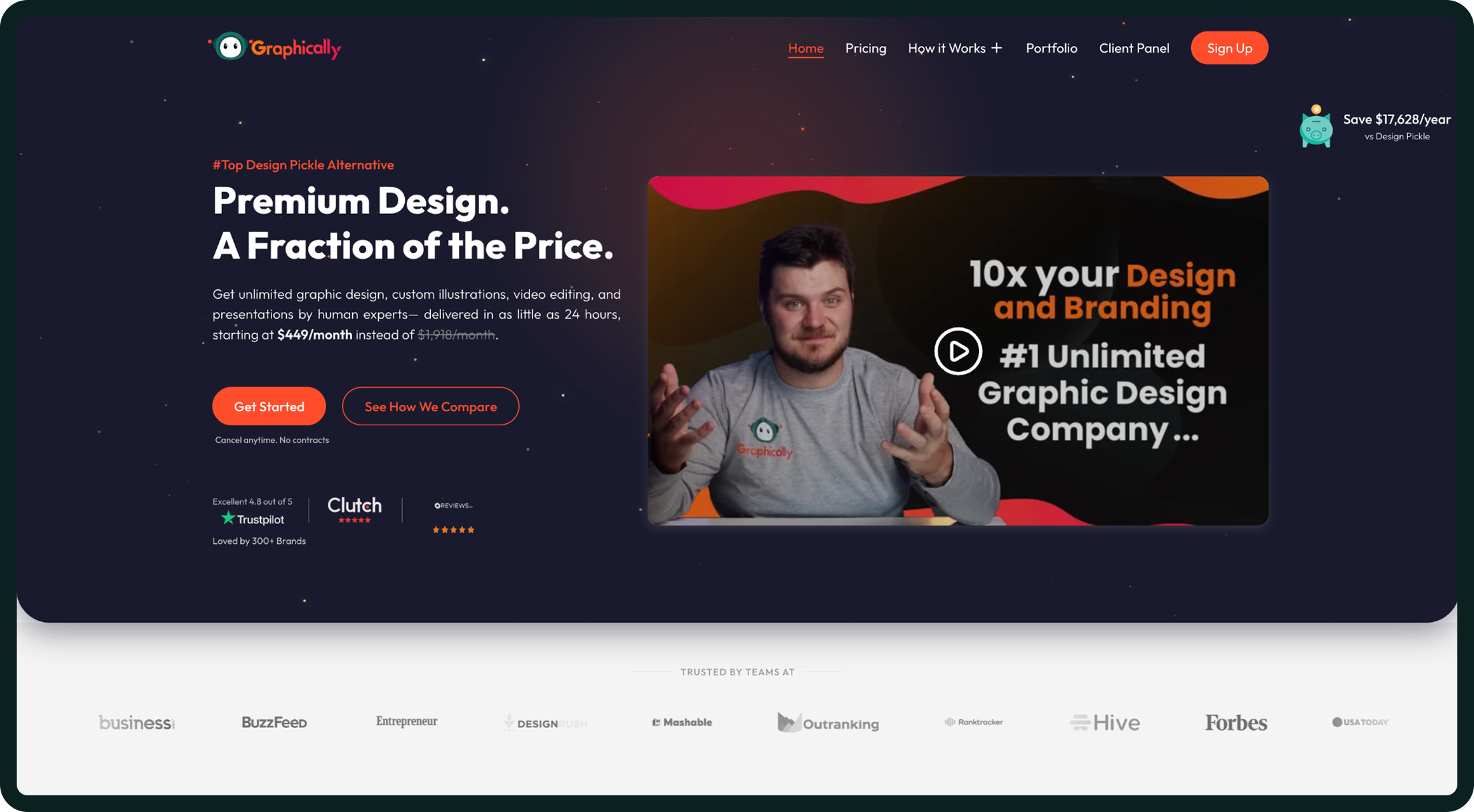
Graphically is the rare cheaper option that does not strip out whole categories to hit its price. Illustration, web work, motion and presentations all sit in the base tier alongside standard graphics, and a project manager comes with it. There is a seven-day money-back period rather than a free trial.
- Best for: Teams cutting spend who still want motion and web inside the base plan.
- Pricing: From around $449 a month, with about $599 to raise concurrent tasks to three.
- Rating: No third-party profile large enough to quote a fair score, so read the most recent reviews yourself.
- Trade-off: The base plan runs a single job at a time, so anything urgent sits behind whatever is already open.
14. Kapa99: Best Way to Test Before Paying Anything
.png)
Kapa99 removes the usual risk of switching. You get fifteen days to try it without handing over card details first, which matters more than it sounds when you are leaving a service you already trust. The work itself is unlimited graphic design, kept deliberately simple: social, decks, banners and print.
- Best for: Small teams with simple, predictable design needs and a hard budget ceiling.
- Pricing: $349 covers the first two months, after which Standard is $499. Plan around the $499 figure.
- Rating: 4.2/5 on Trustpilot, from a sample small enough that it should be read rather than relied on.
- Trade-off: No video or web development, so you'll likely need a second vendor.
15. Hiring In-House: Best If Design Is Now a Full-Time Job
At some point the sums change. If you are on the $2,599 Design Team plan and still short of capacity, a salaried designer becomes a fair comparison rather than an obviously worse one. You gain total control and someone in your meetings. What you give up is flexibility, and you take on recruiting, management and the risk of a single person leaving.
- Best for: Teams with enough steady work to keep one person busy every day for a year.
- Pricing: Estimate only. Depending on seniority and market, salary plus benefits, software and management overhead commonly lands somewhere between $80,000 and $195,000 a year. Price it against local salary data for the role you would actually hire.
- Rating: Not applicable, though your own hiring track record is the number that matters.
- Trade-off: One person covers one skill set, so motion, web and brand work still go outside.
Pick Based on What You Are Actually Short Of
- Your content output has outgrown one designer a day: Teamtown
- You need a senior person owning the brand: Designity
- You want an art director without a big jump in spend: DotYeti or No Limit Creatives
- You work outside US Eastern and want the same people: Flocksy
- Video has become as important as static: Kimp
- You want a refund window before committing: Penji
- You need production volume across several time zones: Design Pickle
- You also need websites built, not just designed: Growmodo
- You are cutting spend rather than growing: Graphically or Kapa99
Getting Ready to Make the Switch
Leaving ManyPixels is unusually easy, and that is the trap. There is no contract to time, no notice period to plan around and no renewal date to beat, so most people cancel first and think about the handover later.
Here are a few things to do if you’ve decided to make the switch:
Get Your Files Out Before You Cancel, Not After
ManyPixels transfers full copyright on everything and gives you the source files, so it is legitimately yours. Access is the problem. Once the subscription ends the portal goes with it, and the working files, templates and any brand assets built up over months live in there.
Download everything while you still can, and make sure you have editable originals rather than exported PNGs.
Use the $10 Pause Instead of Canceling
This is the most underused feature in the category. Instead of canceling outright, pause the account while you try someone else. If the new service disappoints in week three you still have somewhere to go back to, and it has cost you ten dollars rather than a fresh signup.
Give the New Team Taste, Not a Brand Document
Send three recent pieces you were pleased with and three you were not, and say briefly why in each case. That teaches a new designer more in ten minutes than a brand guidelines PDF does in a fortnight, because it shows the judgment calls rather than the rules.
If a lot of your ManyPixels work needed heavy revision, include those examples too.
Run a Two-Week Overlap on Something Real
Give both services the same live brief, not a test task. A test brief gets unusual attention. A normal Tuesday request shows you what the service is like once the novelty wears off. Two weeks costs you at most one extra month, and that is cheaper than finding out in month three.
Four Questions to Ask on Any Sales Call
These target the specific things a ManyPixels plan doesn't cover, so the answers will quickly tell you whether a service actually closes your gap:
- Who decides what good looks like on my account, and what is their title?
- Two urgent jobs land on the same morning. What happens to the second one?
- Which hours does the team I would be working with actually keep?
- Is motion work reviewed by the same person who reviews the static design?
What Hours Cannot Buy
ManyPixels scales by adding hours. Two a day, then four, then eight. If your problem is volume, that is exactly the right ladder and you should climb it.
It does nothing for the quality problem. You can quadruple your hours and still have nobody deciding what good looks like, nobody keeping the brand coherent across pieces made weeks apart, and nobody telling you the approach is wrong before eight hours go into it.
That’s what Teamtown sells. A Creative Lead who owns how the work looks and a Project Manager who owns when it lands, with designers behind them who stay on your account. Capacity comes with it rather than being the whole product.
From $3,000 a month with 15 days' notice to leave. That is more than you are paying now, and if volume really is your only issue then the higher ManyPixels tiers are the cheaper answer. But no number of hours adds judgment.
Book a demo and see how Teamtown fits into your workflows.
Frequently Asked Questions
Who are ManyPixels’ main competitors?
ManyPixels competes with Teamtown, Designity, Flocksy, Penji, DotYeti, Kimp, Design Pickle, Superside, No Limit Creatives, Awesomic, Growmodo, Designjoy, Graphically and Kapa99. They divide roughly into services that add senior creative direction, services that add capacity or disciplines such as video and development, and cheaper services that compete on price alone.
How much does ManyPixels cost in 2026?
ManyPixels publishes four monthly tiers: Advanced at $699, Business at $1,199, Assigned Designer at $1,399 and Design Team at $2,599. Quarterly billing takes roughly 10% off each. Coordination, source files, licensed stock and full copyright transfer are included on every tier, and quiet months can be paused for $10.
Is ManyPixels good?
By the numbers, yes. It holds 4.8/5 on Trustpilot and 4.9/5 on G2, has operated since 2018, and claims more than 150,000 projects delivered. Its published daily output figure is more honest than the vague unlimited promises common in this category. The limits are about how it is built rather than how well it works: no creative director, one daily output at the entry tier, and no motion below the $1,199 plan.
What is the cheapest ManyPixels alternative?
No Limit Creatives starts at $500 a month for two self-managed slots, Graphically at around $449, and Kapa99 advertises around $349 as an introductory rate with a higher ongoing price. Each buys less than the ManyPixels entry tier in some respect, usually the project manager or the range of services included.
Which ManyPixels alternative suits a team that is scaling?
Teamtown, if the constraint is capacity and direction rather than price. You get a Creative Lead and a Project Manager alongside a group of designers who stay on the account, covering brand, web, ad creative, social, presentations, motion and video, from $3,000 a month with no annual commitment.
What does a creative director actually do on a design subscription?
A creative director decides what good looks like before work starts and holds the bar afterwards. In practice that means setting the direction for a campaign, choosing between approaches rather than handing you three to pick from, and keeping a brand coherent across pieces made weeks apart by different hands. It is different from a project manager, who tracks whether work arrives on time, and from a quality reviewer, who checks a file before it ships. ManyPixels includes the latter two; a creative director is what its model leaves out.
What is the difference between an unlimited plan and a daily output plan?
Unlimited describes what you may request. Daily output describes what you actually receive. A service selling unlimited requests still has a queue, so the real limit is how many jobs move at once. ManyPixels publishes a daily output figure instead, which is a more honest way of saying the same thing: at the entry tier that is one daily output, which ManyPixels equates to roughly two hours of design work per business day, rising to about four and then eight on higher plans. When comparing plans, look for the number of concurrent projects or daily hours rather than the word unlimited.
Does any alternative match the ManyPixels $10 pause?
Not exactly. Kimp pauses at $19.95 a month and holds your rate, Designjoy carries unused days forward when you pause, and Designity charges $995 for a two-week pause. Several services do not publish a pause policy at all, so ask before assuming one exists.